

Arts
A Powerful Tool for Comprehensive Education
At The English School, arts subjects go beyond mere instruction; they are a powerful vehicle for the comprehensive development of our students’ emotions and sensitivity. At the same time, they foster a profound international outlook through immersion in diverse cultural expressions. Our arts programme equips young people to channel their invaluable creative potential, understand the complex world around them and develop sharp critical and aesthetic thinking.
We foster environments of respect and self-expression, where the arts become a powerful tool for building self-esteem, empathy and inclusion from an early age.
An Artistic Journey from Nursery to Secondary
From Nursery through to Grade 7, our students embark on a journey of discovery and development of their artistic skills in visual arts, drama and music. This comprehensive approach enables them to reach their full potential and reveal their unique talents. In Grades 8 and 9, we introduce the enriching subject of Media, offering students the opportunity to choose a specialisation within the various artistic disciplines. Finally, in Grades 10 and 11, those with a deep passion can opt for a specialisation in film, visual arts or music.
A Passionate and Experienced Teaching Team
Our teaching staff comprises arts professionals who have dedicated their vision and experience to education. Hailing from prestigious institutions such as the University of the Andes, Javeriana University, La Sabana University, the Pedagogical University, Jorge Tadeo Lozano University and the National University, their solid academic background is complemented by specialisations, master’s degrees in Education or doctorates in fields related to art, history and related disciplines. Their expertise extends to the implementation of rigorous international programmes, as evidenced by their active participation in training workshops, their role as IB programme examiners and their valuable contribution to the global network of IB educators.
Visual Arts
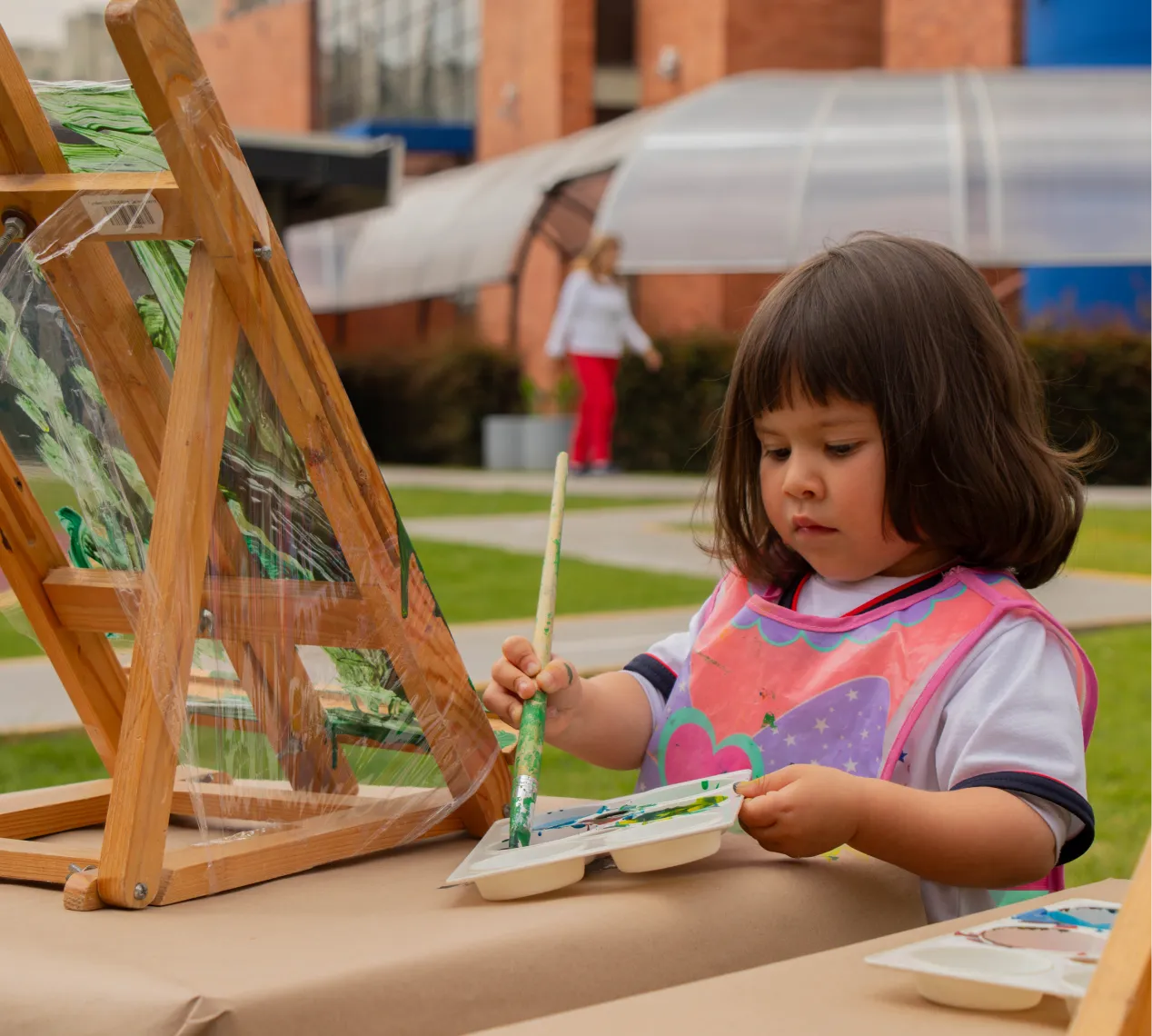
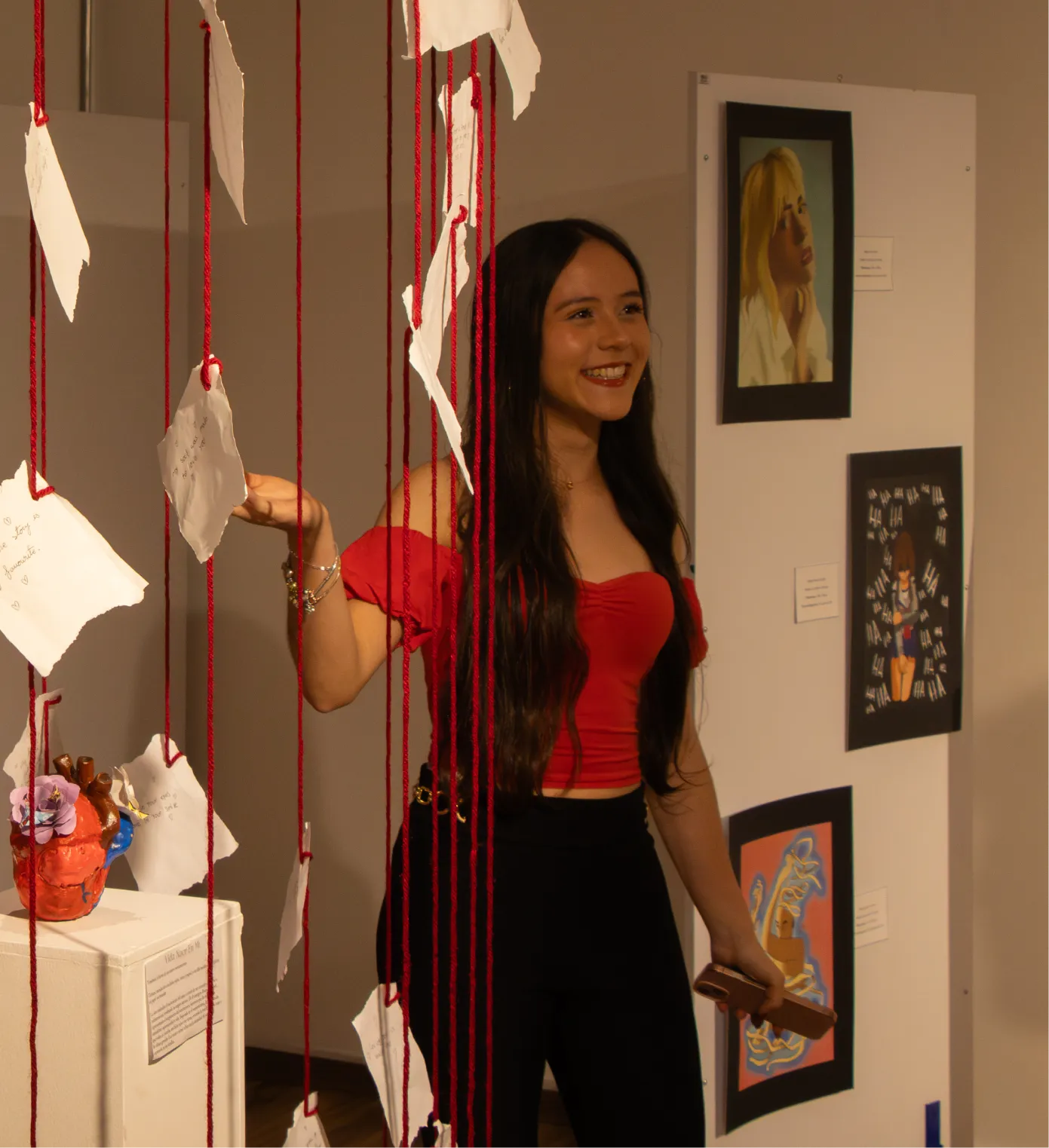
Our innovative Visual Arts curriculum is carefully designed to align with the cognitive and skills development needs of our students at every stage of their learning journey. We provide the essential tools for understanding artistic practice from the perspective of art history and through the use of a variety of materials, all within a constructivist approach to teaching and in a specialist classroom that fosters a love of learning.
In Primary, the central focus of this process is the sequential exploration of historical cultural processes, with transdisciplinarity and student agency being integral components of every art lesson.
In Secondary, an understanding of art is developed from a contextual perspective, through questions and concepts that form the core of the inquiry. The teaching approach combines elements of the constructivist approach and project-based learning.
Theatre
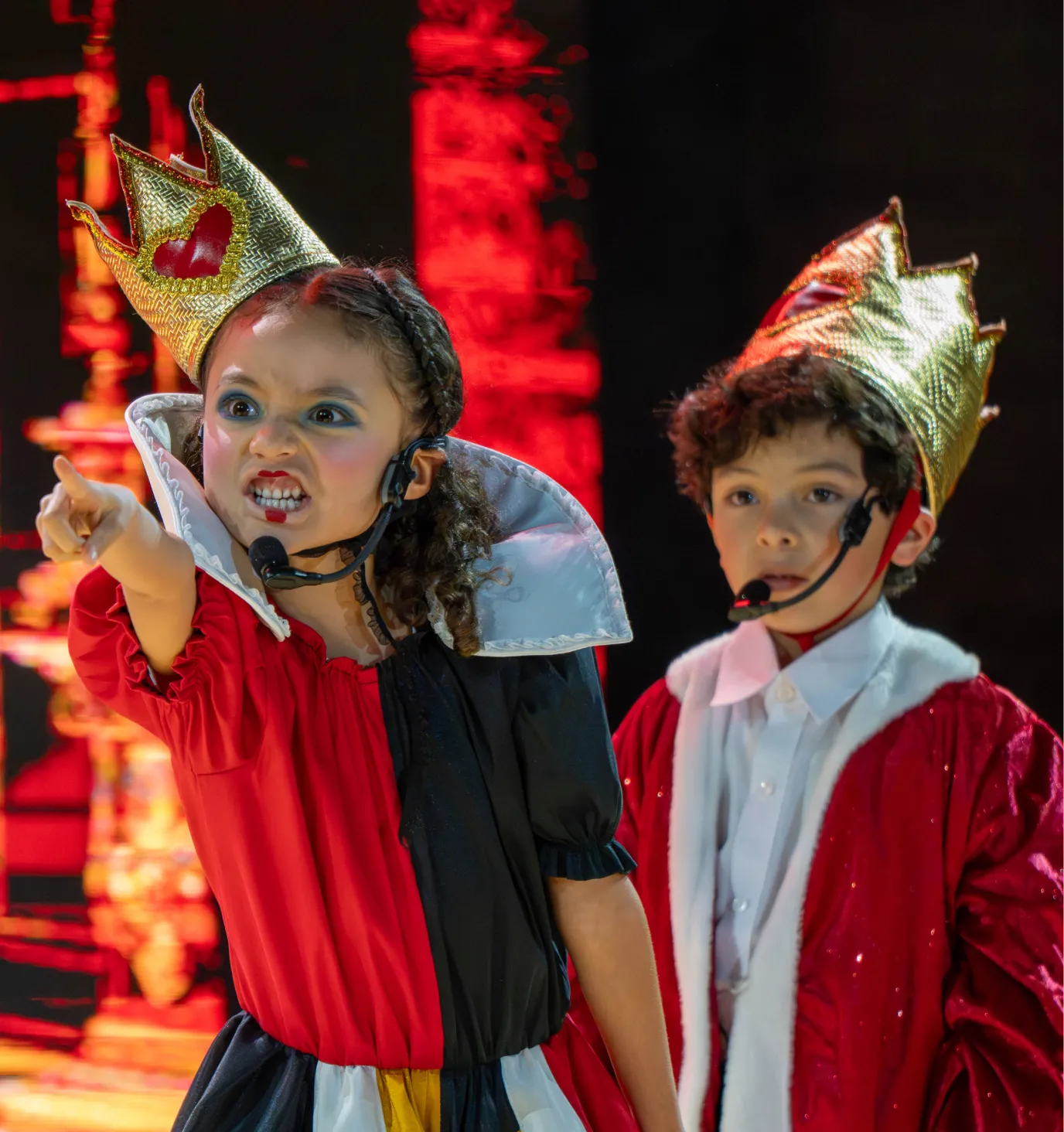
In each grade level, essential social skills and a deep understanding of body awareness are nurtured. Play is also incorporated as a powerful form of learning, and the concept of role-play is explored.
In Primary, our sequential arts programme includes a valuable appreciation of the various forms of theatre within our culture, the fundamental role of the actor and the playwright, and the practice of acting in different settings. Particular attention is paid to the development of characterisation.
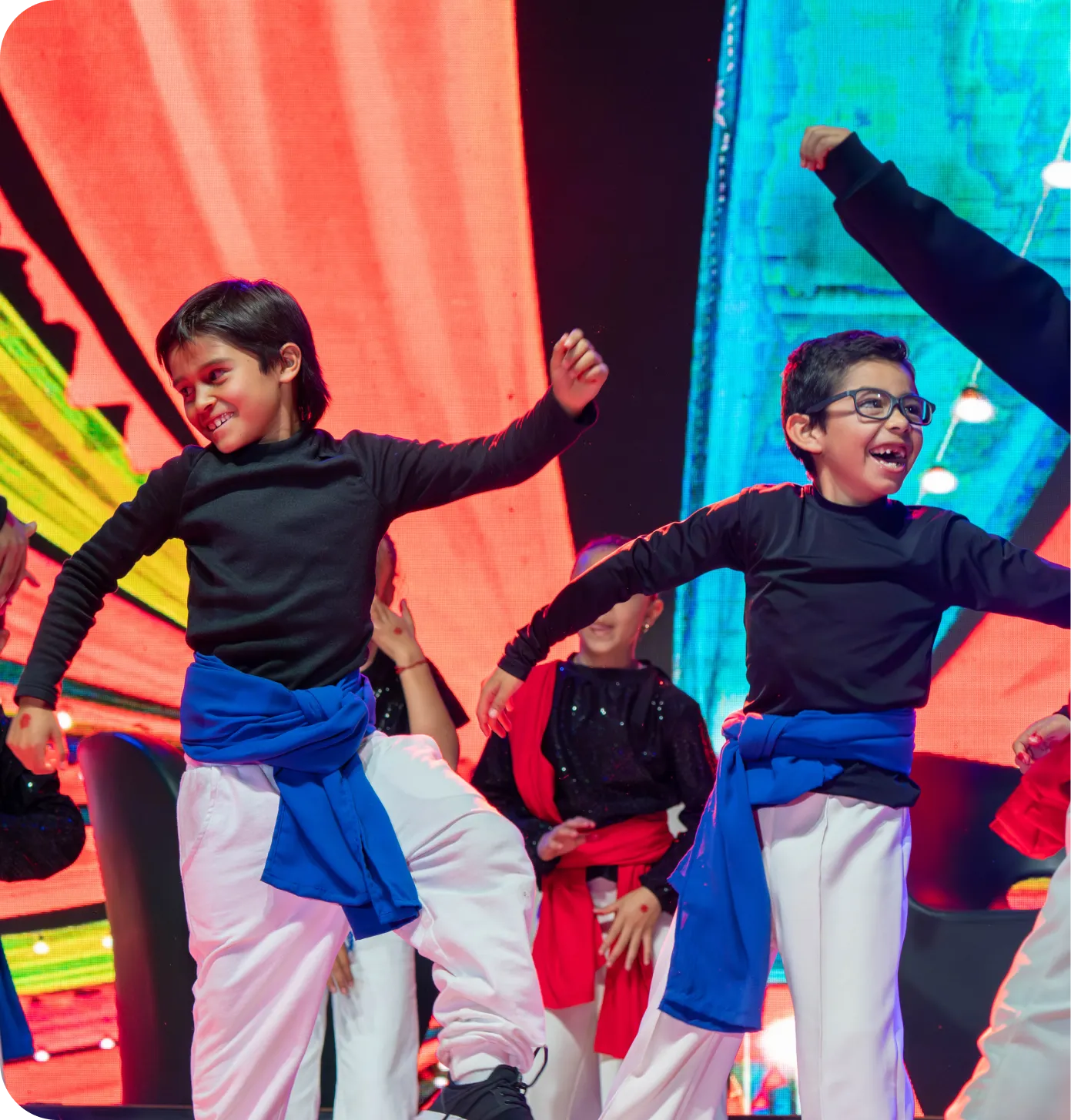
At Secondary, the programme adopts a cultural and contextual approach to theatre, exploring the complex construction of the actor’s role, the fascinating world of the circus, and the active role of the art viewer as part of a holistic process. Students develop an understanding of script, set design and character, both within the history of theatre and through their own narratives. Emphasis is placed on musical theatre, characterisation, expressive gesture and the meaningful use of masks, amongst other essential elements.
Media and Film
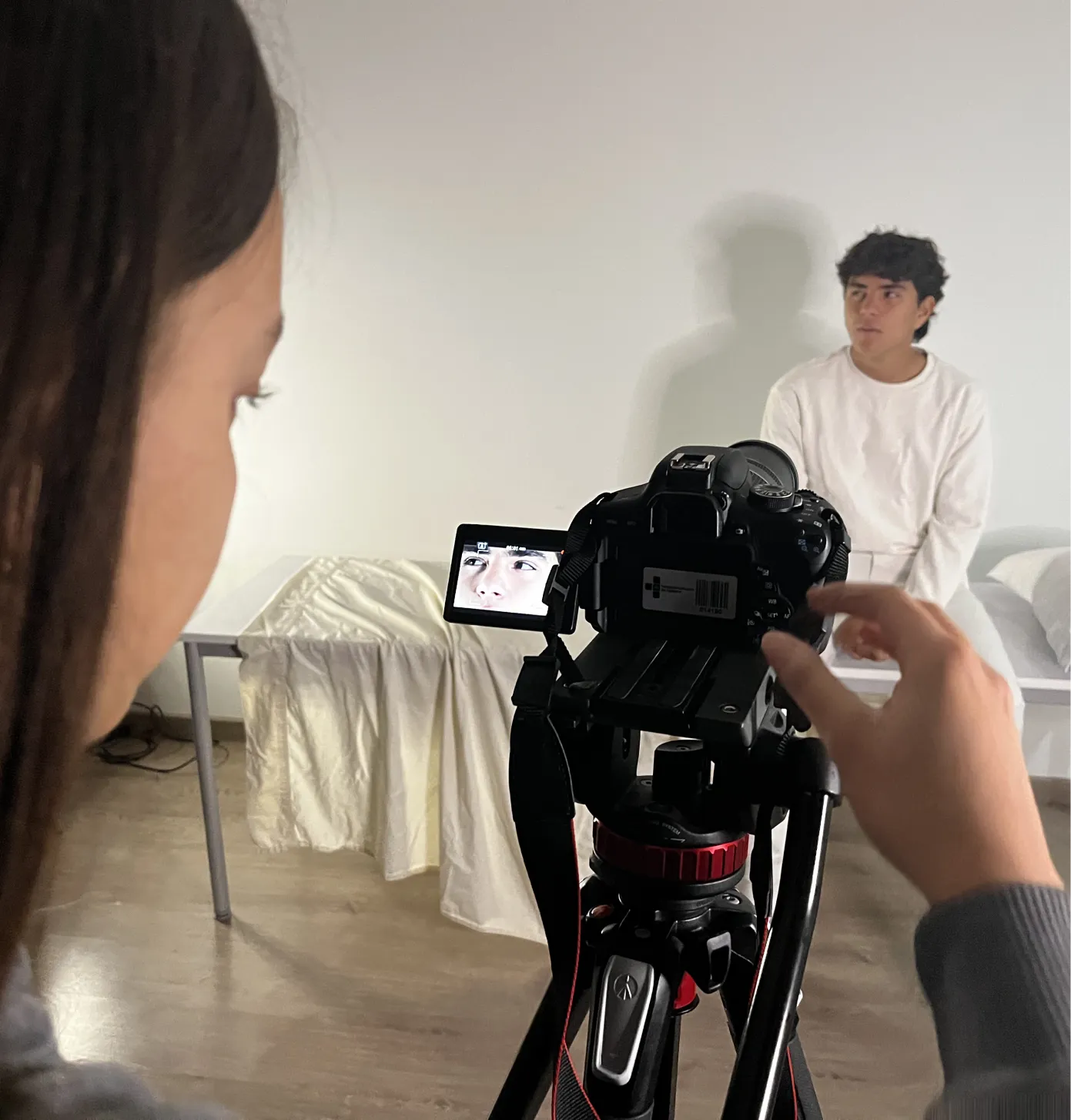
Our Media and Film electives in Secondary offer an innovative perspective on understanding contemporary visual culture. In a world saturated with images, we equip students to critically analyse how we consume and are influenced by advertising and visual media. The development of digital skills, image analysis and the study of film make this subject area one of great cultural value.
We equip our students with state-of-the-art digital editing software, fostering a deep understanding of innovation and the ethical use of imagery. Through hands-on experience with professional cameras and exploring the creative potential of mobile phones, students develop skills in roles such as director, producer, actor and screenwriter, creating short films and animations, and taking part in enriching external events and competitions.
Music
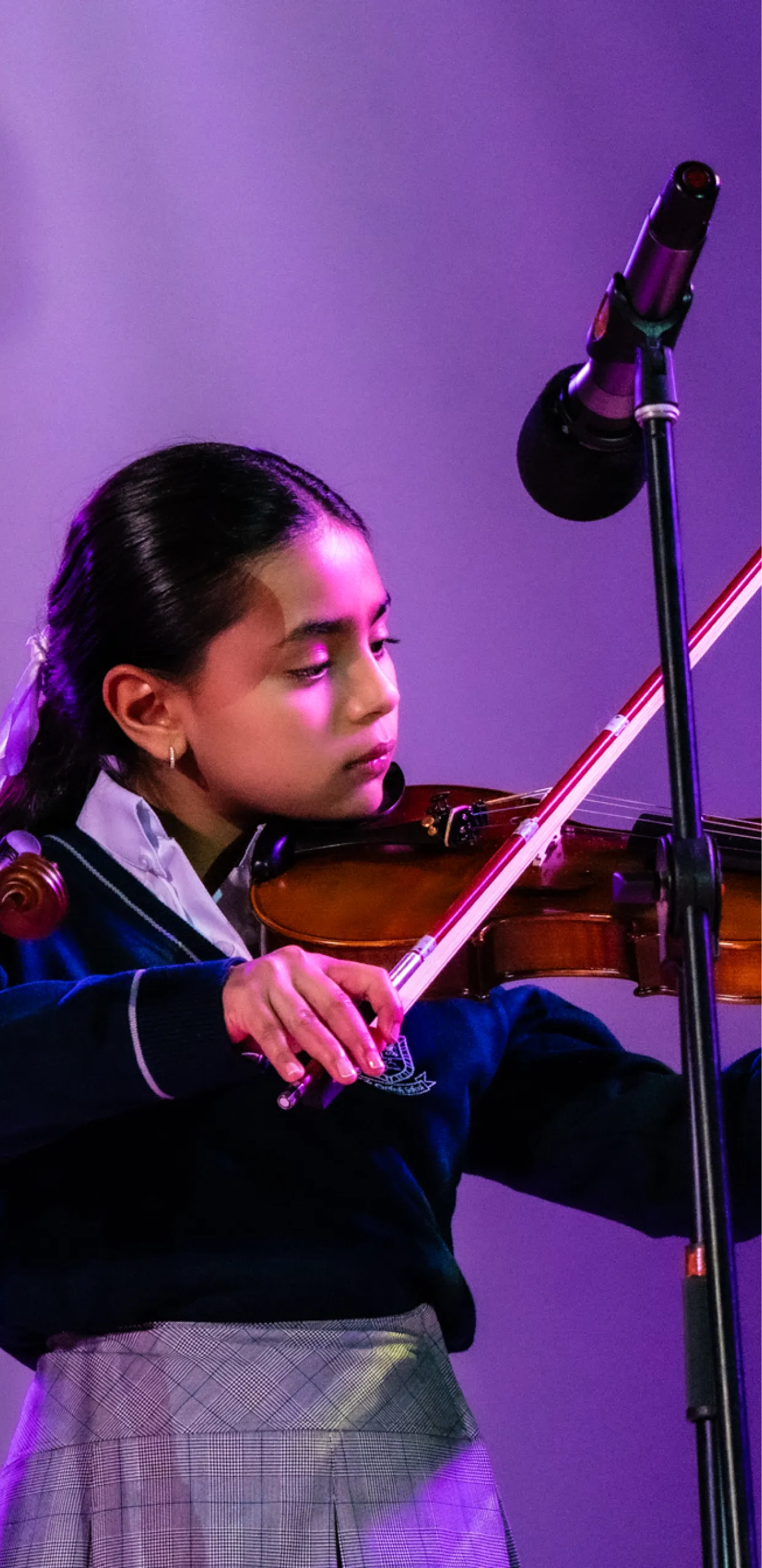
Music is an essential experience that enriches every child’s holistic development. Through an educational and artistic approach of the highest standard, we explore music as a powerful tool for expression, communication and the development of cultural identity. We encourage students to participate actively as discerning listeners, creative performers, spontaneous creators and curious explorers, connecting music with their surroundings and their own sense of self.
Pre-Jardin to Transition: The beginning of the musical journey
From an early age, the programme is designed to encourage student autonomy and nurture unique talents through activities such as:
- Singing and vocal technique.
- Introduction to playing an instrument.
- Body movement and rhythmic coordination.
- Improvisation and musical composition.
- Reading and interpreting musical notation.
- Games, musical stories and public performances.
- Use of digital technologies in music.
Grade 1 and 2: The basics of singing and exploring instruments
Students develop their vocal pitch, sense of rhythm and musicality through:
- Group and solo singing.
- Ensemble featuring bar instruments (xylophones and metallophones).
- Small percussion instruments (claves, maracas, tambourines, drums).
These experiences lay the foundations for an understanding of rhythm, melody and harmony, encouraging attentive listening and artistic expression in a collaborative environment.
Grades 3 and 4: Exploration of instruments and ensembles
As students grow, so does their musical world. At this stage, students have the opportunity to explore a wider variety of instruments, enabling them to expand their interpretative and creative abilities:
- Electric and acoustic guitars.
- Keyboards and digital pianos.
- Electric basses.
- Drums and contemporary percussion.
The aim at this stage is to explore and experiment with vocal and instrumental ensembles, where students learn to work as a team, follow a musical structure, listen to others and enjoy the collective creative process.
Grades 5 and 9: In-depth study of music and critical thinking
In the first years of Secondary, from Grade 5 to 9, music provides a space for students to explore, experiment and shape their artistic development from a critical, collaborative and global perspective. Through meaningful experiences, they learn to recognise, understand, analyse and discuss different musical contexts, genres and cultures.
The curriculum is designed to offer a rich and varied experience that combines theory, research and practice. Each unit provides an opportunity to broaden students’ historical, technical and cultural understanding of music, whilst developing skills such as:
- Music theory and language.
- Aural development and musical analysis.
- Research and critical reflection.
- Vocal and instrumental performance.
- Collaborative work and artistic leadership.
As part of their comprehensive training, students also experiment with artificial intelligence platforms applied to music, which enables them to:
- Compose, analyse and transform sounds using emerging tools.
- Explore new creative possibilities through human-machine interaction.
- Master technological languages and broaden your musical understanding in contemporary contexts.
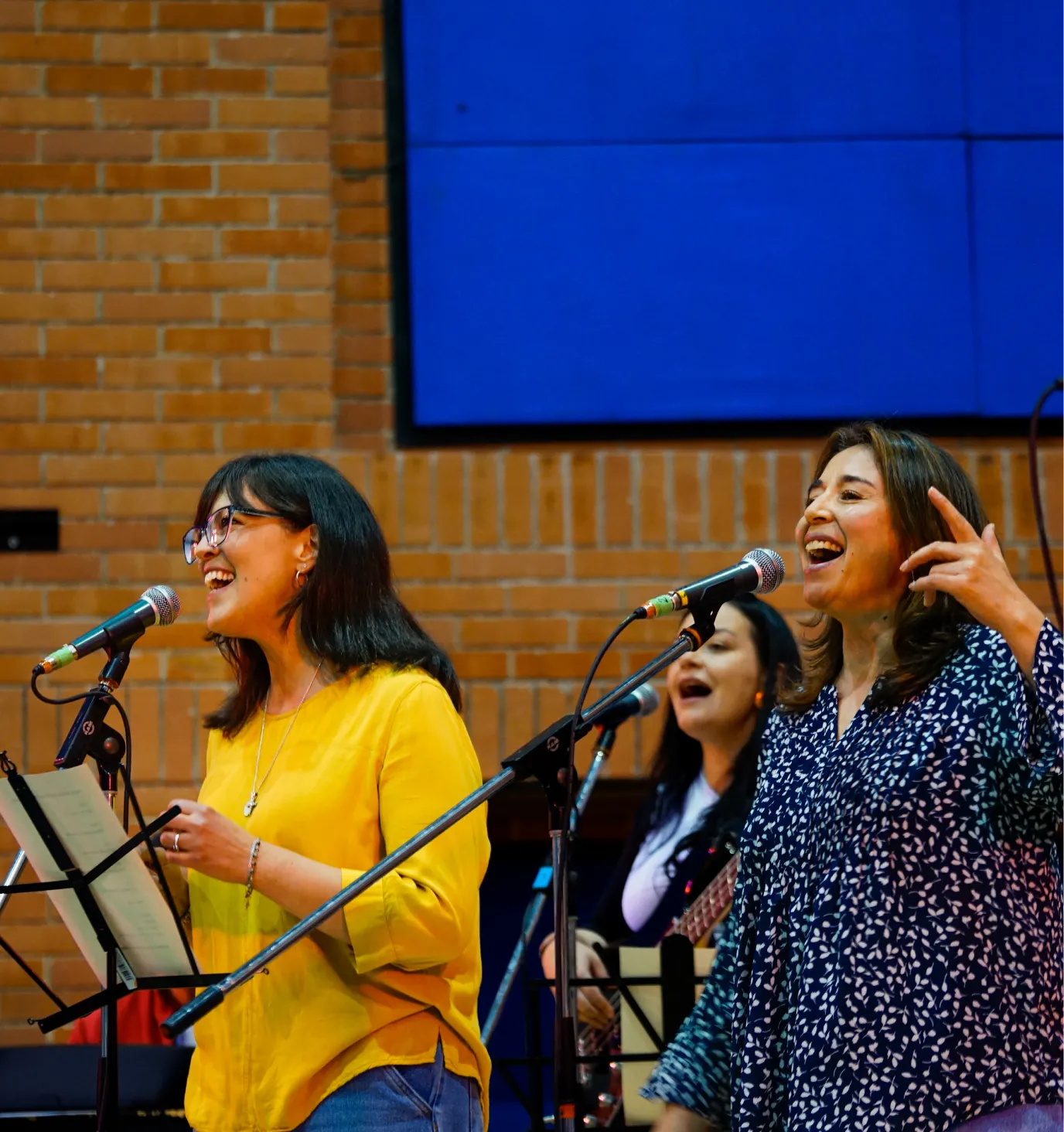
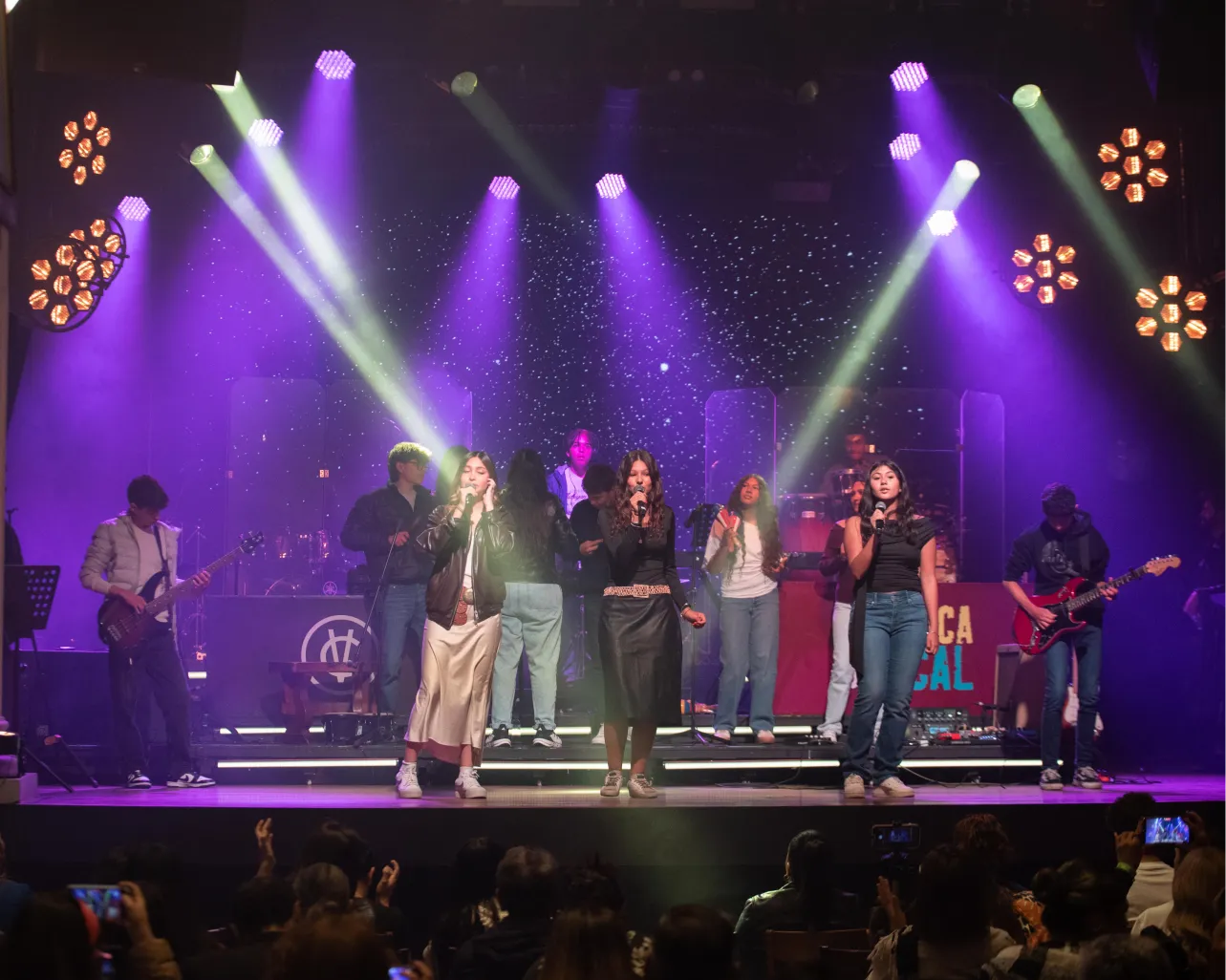
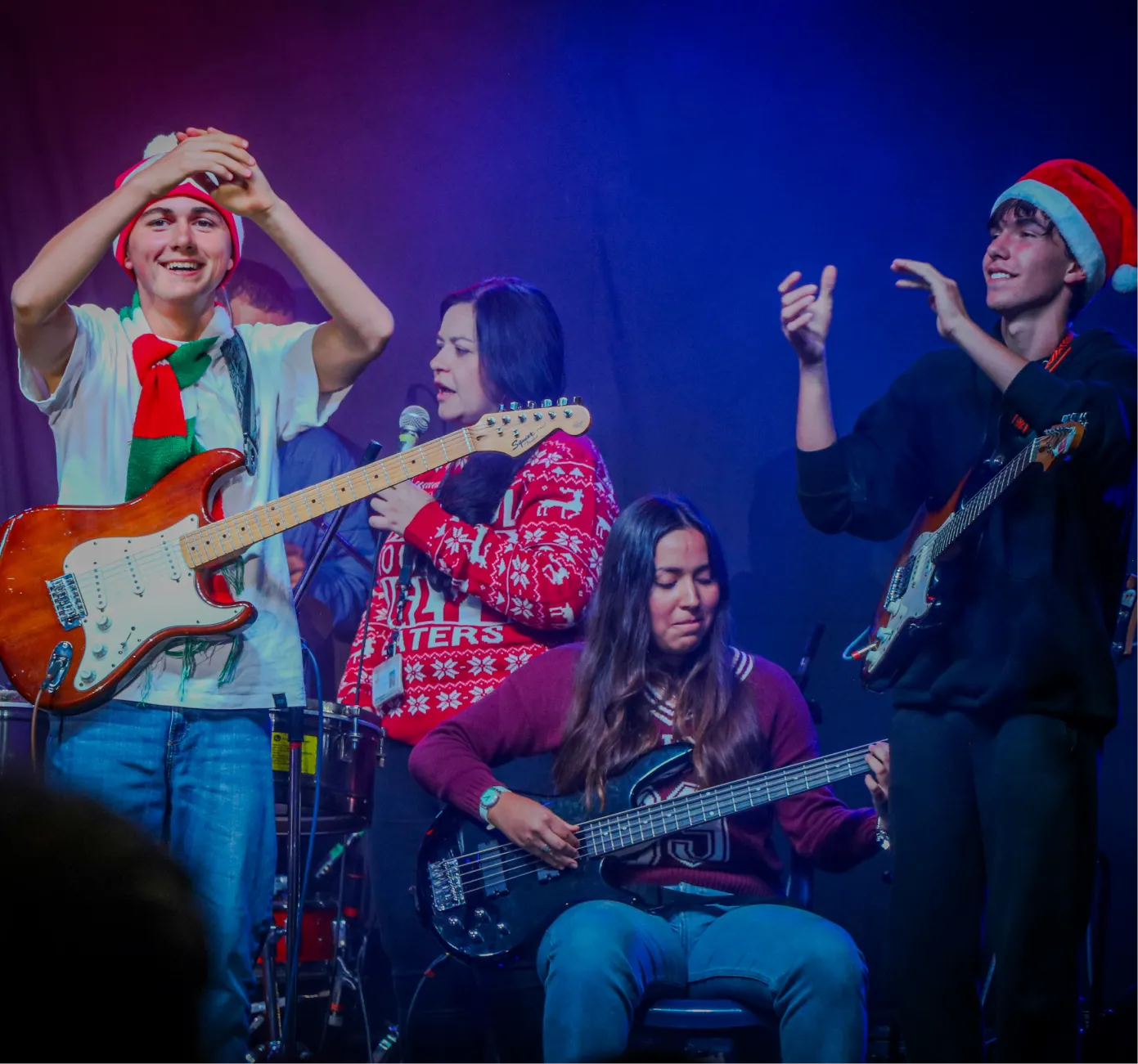
Similarly, students form bands and work on collaborative projects that culminate in live performances for parents and the school community.
Grades 10 and 11 – IB Music Programme: reflection, creation and impact
In the final stage of their school journey, students who choose Music as a subject in the Diploma Programme (DP) of the International Baccalaureate (IB) face the challenge of integrating, questioning and expanding their musical knowledge through a deeply reflective, creative and interdisciplinary approach.
Through the curriculum, students:
- They compare and draw connections between music from different cultural and historical contexts.
- They develop their own creative works (composition or production).
- They perform instrumental or vocal pieces, both individually and as part of an ensemble.
- They carry out personal research into a relevant musical topic, demonstrating analytical depth and a critical approach.
Through collaborative art, the programme fosters conscious and global artistic expression, where music acts as a bridge between cultures, ideas and realities. The final musical projects showcase not only talent and technical skill, but also a critical perspective on the world through art.
Music Groups
- Early Years Choir
- Primary Choir
- Primary Vocal and Instrumental Band
- Three Grade 8 Vocal and Instrumental Bands
- Three Grade 9 Vocal and Instrumental Bands
- Secondary Vocal and Instrumental Band
Artistic and Cultural Events
- UNCOLI Festivals: Pre-School, Primary and
- Secondary
- Holiday Show/Winter Wishes
- Christmas Breakfast – General Services
- The English School Birthday Celebration
- Community Day
- Round Square
- Transition Graduation Ceremony
- PYP Exhibition
- MYP Concerts
- Grade 11 Graduation Ceremony
- Assemblies
- Special Invites
 Discover
  Admissions
  Learning
  Wellbeing