

Technology
Innovation and 21st-Century Skills
At The English School, we prepare our students to lead in an ever-changing digital world by integrating technology as a cornerstone of their education. From Early Years through to Secondary, our innovative technology curriculum is designed to develop essential 21st-century skills, fostering critical thinking, creativity and problem-solving through practical and relevant learning.
Early Years and Primary
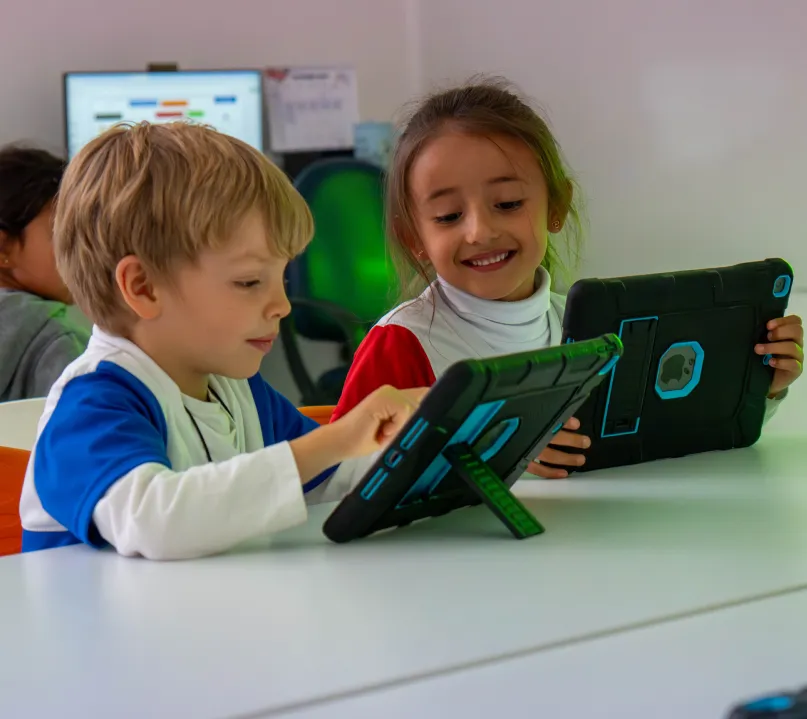
In our educational approach for the early years, we promote technology education that is aligned with the demands of the 21st century. As an IB school, we integrate technology with units of inquiry and transdisciplinary themes, enabling students to link their technological learning with other areas of knowledge. Through applied projects and meaningful experiences, they develop critical thinking, creativity and problem-solving skills in constantly evolving digital environments.
Our students explore topics such as:
Digital citizenship and the responsible use of technology.
Computer applications, operating systems and safe browsing.
Robotics teaching in Primary (use of Arduino, educational robots)
3D design and printing.
Programming with Scratch, App Inventor and Arduino.
Cloud-based collaboration tools such as Google Workspace.
Artificial intelligence applied to the creation of solutions and prototypes.
The skills we develop include:
Proper use of different devices.
Computational thinking.
Design, logic and problem-solving.
Time management, independence and perseverance.
Collaborative work, creativity and innovation.
Our technology learning spaces encompass three areas for learning, development and consolidation of technology use within the school:
e-Learning classes for all students.
Programming and Robotics Club.
RoboTES, our flagship extracurricular activity.
Using Arduino: university-level technology
Latest robots added to the curriculum
Participation in competitions
Secondary
Design and technology for future innovators
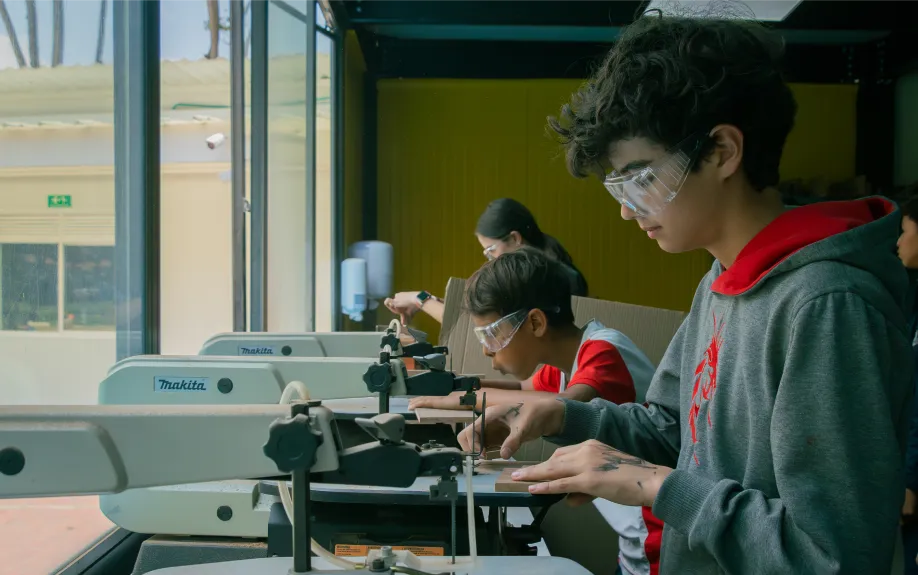
Our Design and Technology programme in Secondary offers a comprehensive education in creativity, problem-solving and critical thinking. We combine digital tools and manufacturing processes to develop innovative solutions, tailoring our approach to the learning needs of each stage within the IB programmes: the Middle Years Programme (MYP), the Diploma Programme (DP) and the Career-related Programme (CP).
Curriculum and Learning Progression

Middle Years Programme (MYP) – Grades 5 to 9
We develop design thinking through practical projects that combine digital technology with the creation of physical products. Students work through the stages of the design cycle: Inquiry, idea development, solution creation and evaluation.
Featured projects:
- Educational video games
- Educational games and puppets
- Mobile apps and websites
- Ergonomic furniture and international cuisine
- 3D-printed tourist guides
Diploma Programme (DP) – Grades 10 and 11
An in-depth look at technological design, CAD modelling and digital manufacturing.
The International Baccalaureate Diploma Programme’s Design Technology course focuses on the understanding and application of design in technological contexts, and is offered at Standard Level (SL) and Higher Level (HL). The curriculum is structured around three main components:
- Design in Theory: Explores fundamental design concepts.
- Design in Practice: It focuses on the practical application of these concepts.
- Design in Context: Analyses the impact of design in various settings.
Furthermore, the programme places an emphasis on the development of practical skills and an understanding of the impact of design on society and the environment.

Career-related Programme (CP) – Grades 10 and 11
Design applied to marketing, community management and prototyping.
The professional training courses in Community Management (digital marketing) and Prototype Design combine creativity, technology and business strategies for project management.
- Community Manager: It focuses on managing a brand’s online presence, creating content, engaging with the audience, and implementing branding, advertising and graphic design strategies.
- Prototype Design: It enables the development of innovative products by creating models that facilitate the visualisation and testing of ideas. This process helps to optimise the design prior to final production, ensuring that the product meets the user’s needs.
State-of-the-art infrastructure and resources
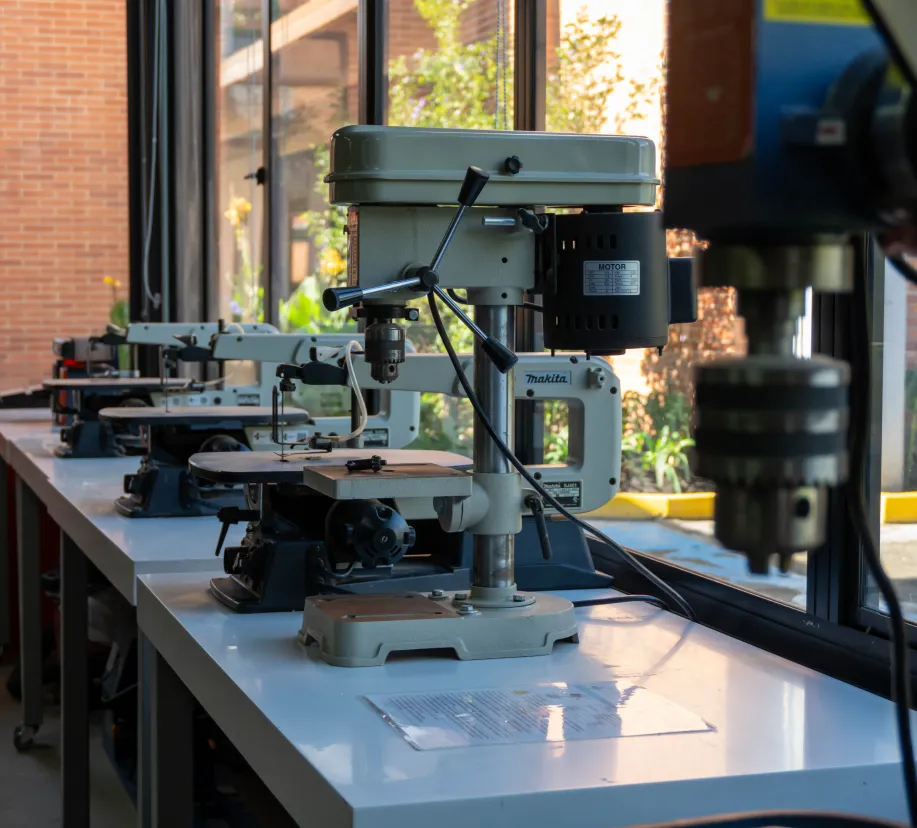
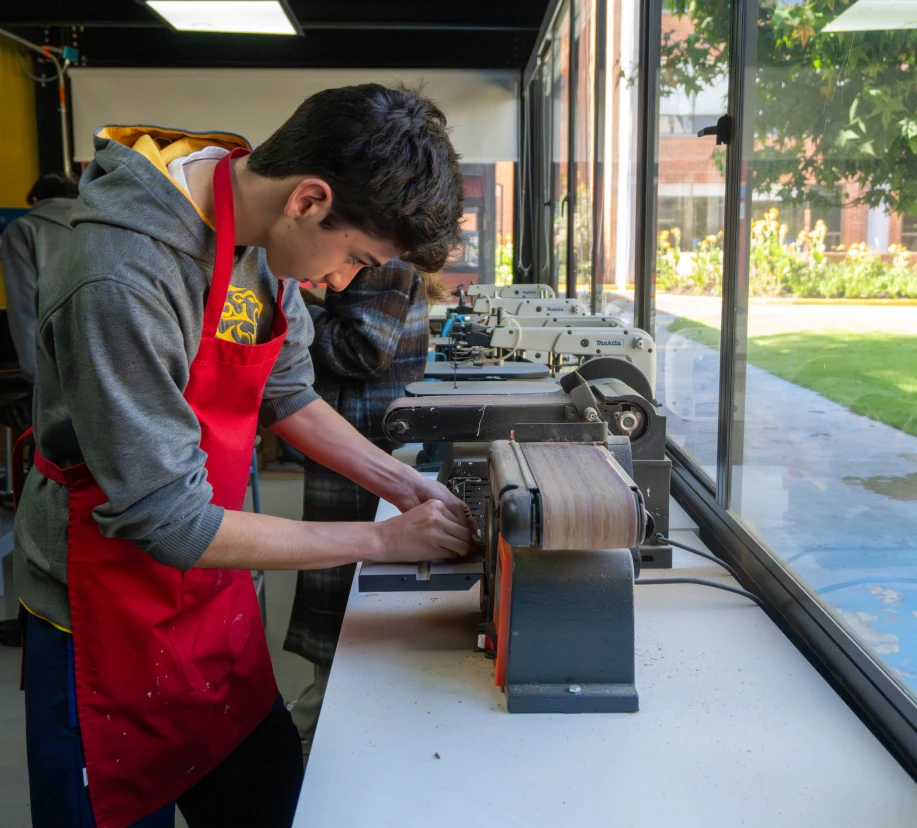
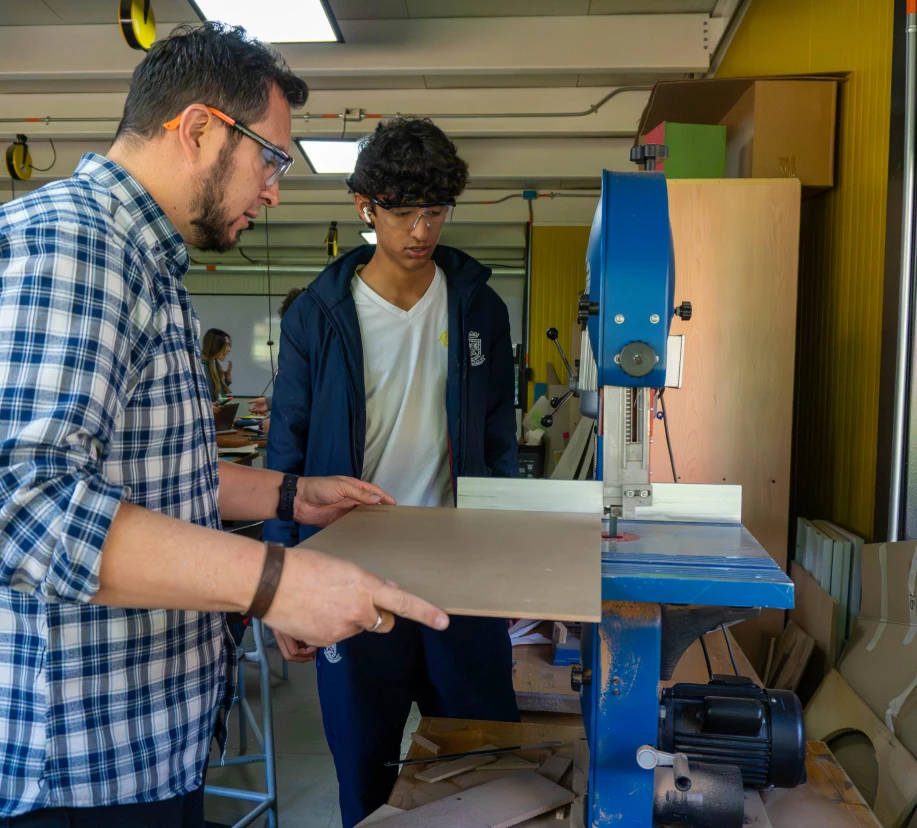
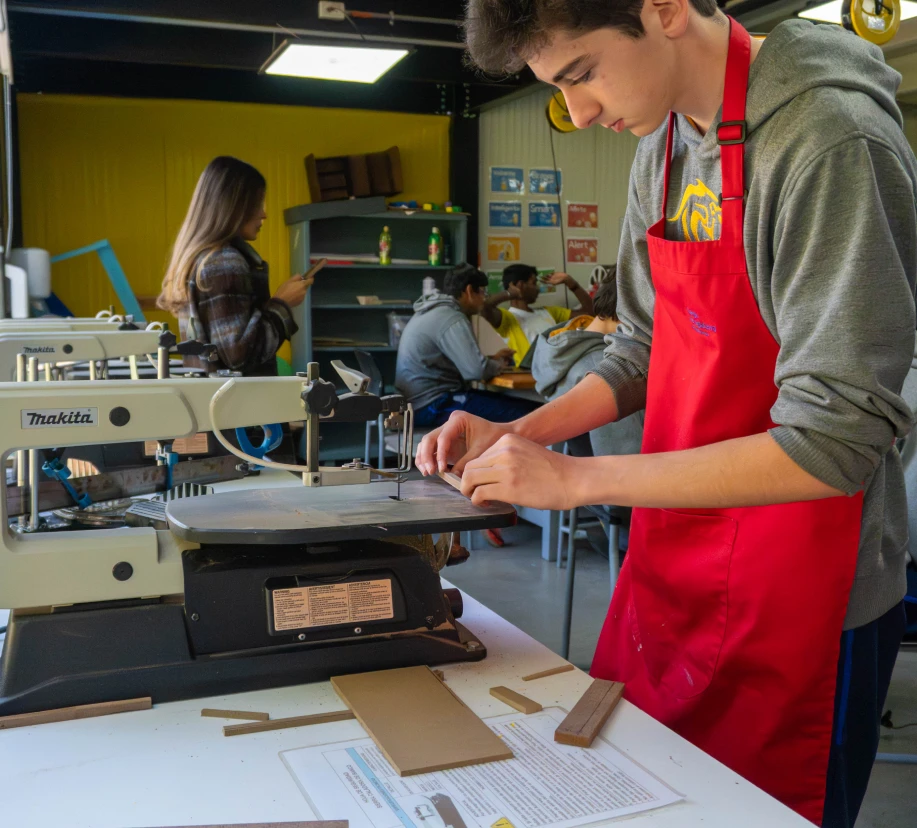
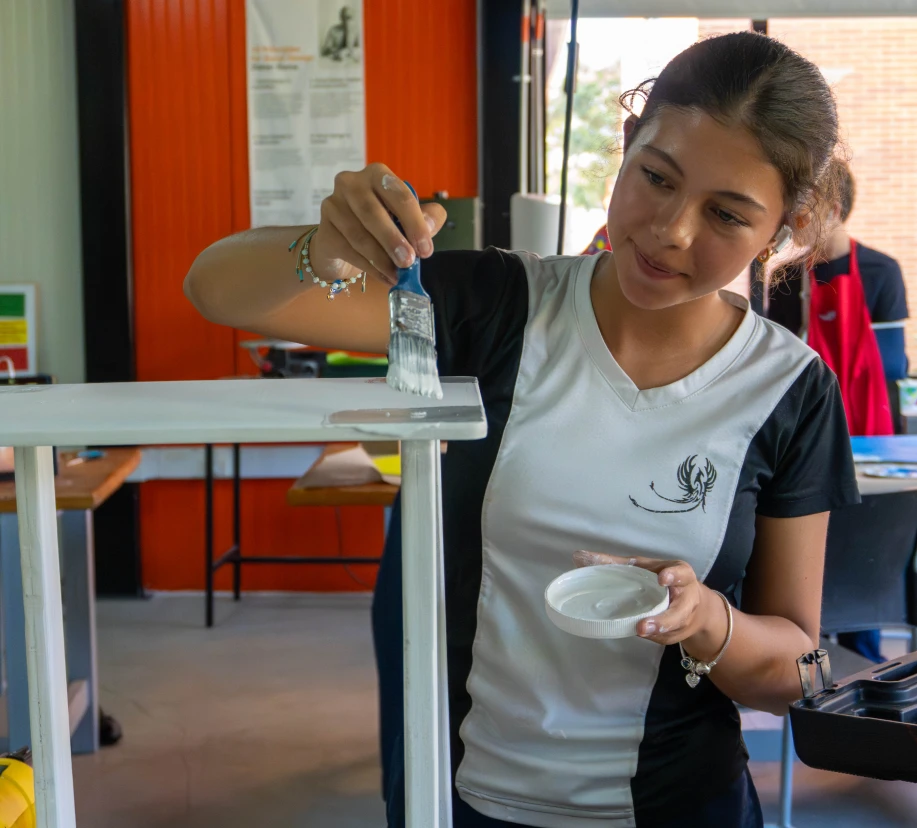
We have two design studios, two computer rooms and a machine shop equipped with specialist tools such as a CNC router, laser cutter, drill press, jigsaw, band saw and welding equipment, amongst others. Furthermore, our computers are equipped with specialised, licensed software, including the Adobe suite, Rhino and a wide variety of other programmes, complemented by high-speed internet access, fostering a school environment that encourages innovation.
 Discover
  Admissions
  Learning
  Wellbeing